A unity produced by splitting
Until then each English public school played its own game: at Eton the goal was the space between two trees, at Harrow catching the ball was allowed, at Rugby the tradition was to run with it. Alumni could not compete against each other, so a common code was proposed. Between October and December 1863 the Football Association agreed the first written rules, after six meetings.
The decisive clause was short: no running with the ball in hand, and no "hacking" (kicking an opponent's shins) or "hacking over" (tripping). Blackheath withdrew over it, and in 1871 formed the Rugby Union. The two sports did not diverge because they were different; they were different because they split first.
The early code still carried folk traces: no crossbar, no penalty, no net, a goalkeeper who could handle anywhere, and an offside law requiring three defenders between a player and the goal. That last clause became the spine of tactical history — see chapter three.
The first international: 0–0
On 30 November 1872, at Hamilton Crescent in Glasgow, Scotland and England drew 0–0 in front of about four thousand people. The score is irrelevant. What the match established was a new unit of competition: the national team. Over the following decade internationals became the fastest channel for the rules to spread.
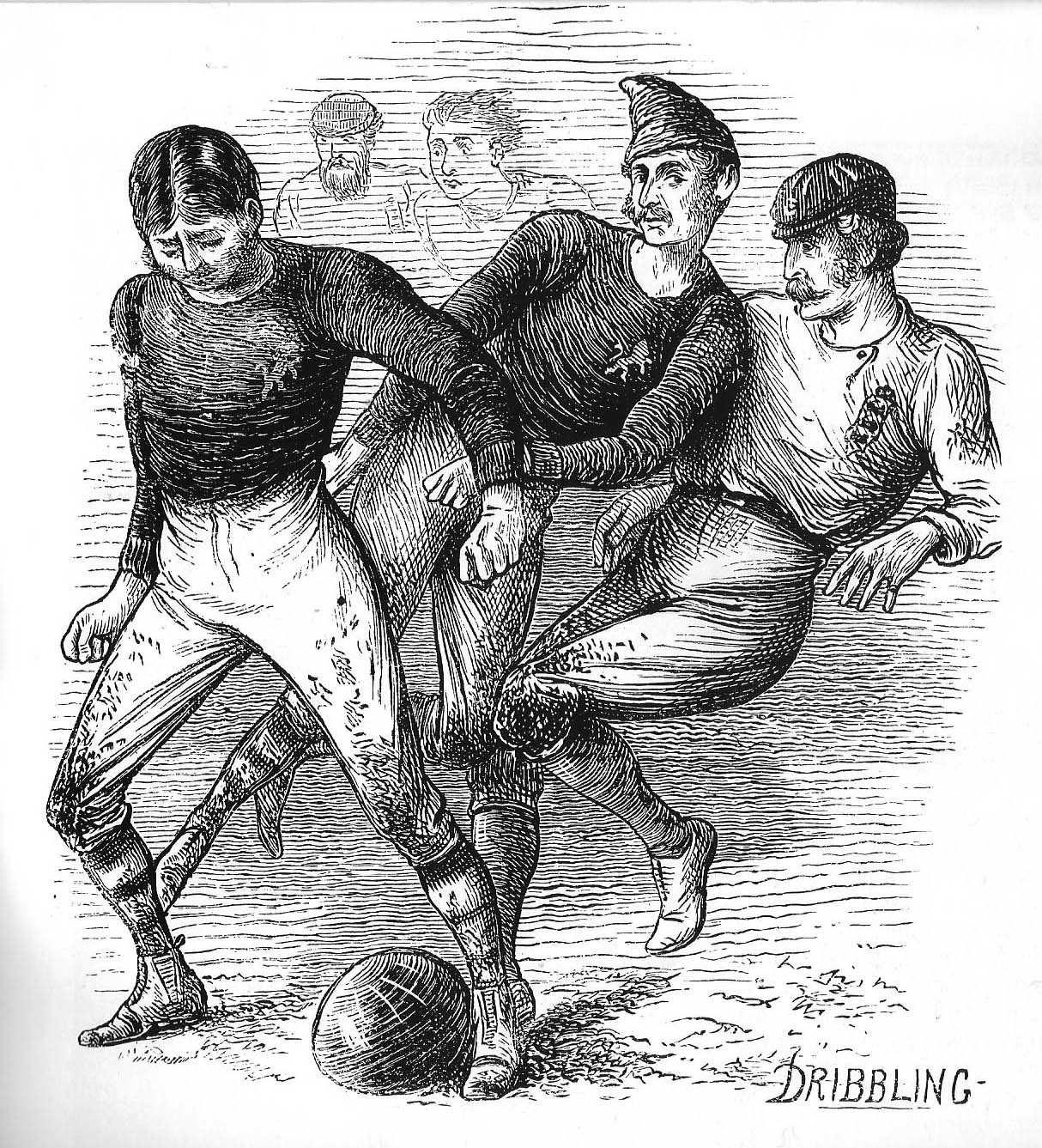
A 0–0 also exposed the game's inefficiency. With six forwards crowded around the opposition box and an offside law that punished almost every forward pass, matches collapsed into individual dribbling and long shots. Changing that required the law itself to loosen.
Professionalism: turning a match into a weekly product
The industrial cities of northern England moved first. In 1888 twelve clubs formed the Football League on a home-and-away fixture list — the world's first professional league. The inaugural champions, Preston North End, went 22 matches unbeaten and were nicknamed "The Invincibles".
The knock-on effects were more violent than any law change: players trained for wages, spectators paid at the gate, clubs shared the receipts. Gate money built stands, floodlights and transfer fees; transfer fees built scouting, contracts and the business model of buying a title. That structure has not essentially changed — only the number of zeroes.
FIFA: turning rules into diplomacy
On 21 May 1904, seven national associations founded FIFA in Paris: Belgium, Denmark, France, the Netherlands, Spain, Sweden and Switzerland. England did not join. The FA regarded itself as the author of the laws and saw no need to join an organisation founded by others. That attitude lasted into the 1950s.
FIFA initially held almost no power. The laws remained with the International Football Association Board — four British associations, formed in 1886 — and FIFA only gained two seats in 1913. Its real authority came from tournaments: the 1930 World Cup turned FIFA from a coordinator into a host, and broadcast and sponsorship revenue then turned it into something closer to a government.
The IFAB still works on supermajority: four British associations hold one vote each, FIFA holds four, and any law change needs four of six. Which means the English still hold a veto over the laws of football — a structure created in 1886 surviving intact into the twenty-first century.
The women's game, banned
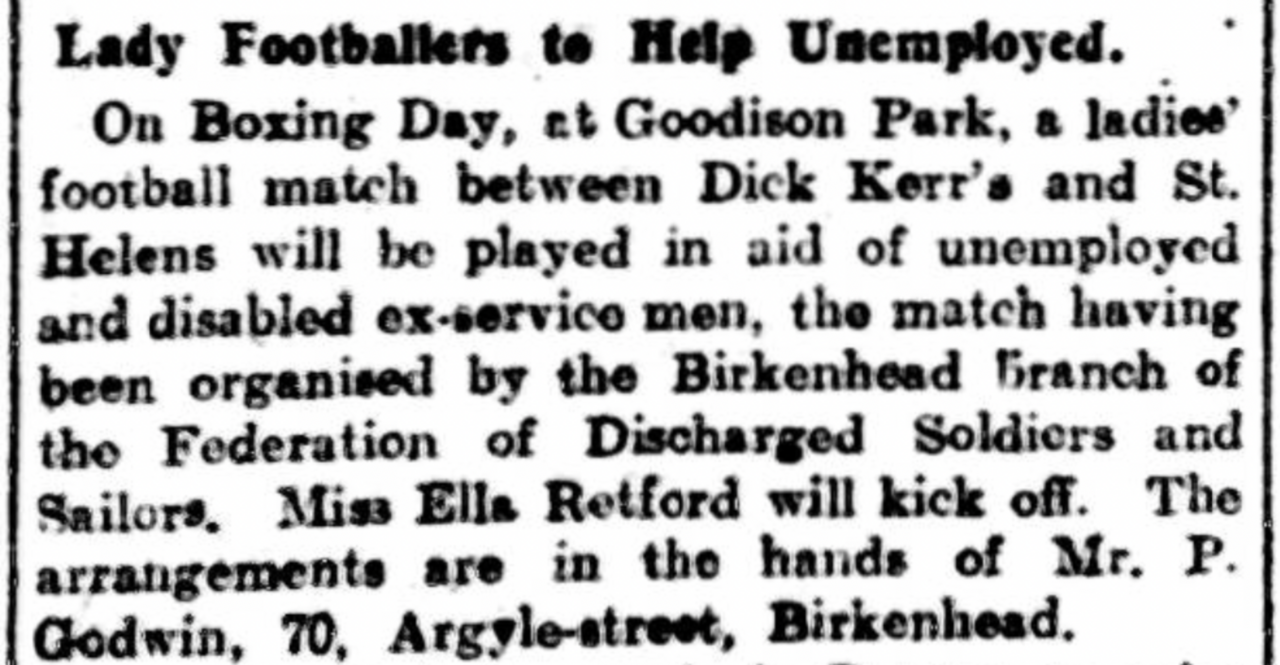
Women's football grew out of factory teams during the First World War. Dick, Kerr's Ladies were the most famous: on 26 December 1920, at Everton's Goodison Park, they drew a crowd of about 53,000, and their charity matches raised sums worth millions in today's money.
On 5 December 1921 the FA banned women's matches from its affiliated grounds on the grounds that football was "quite unsuitable for females". The ban lasted fifty years, until 1971. This is not a forgotten chapter but a deliberately deleted one: it explains why the women's game had to rebuild its commercial base, coaching structure and youth pathway from nothing.
A tournament that defined a century
Uruguay, Olympic champions in 1928, hosted and built the Estadio Centenario for the first World Cup. Thirteen teams played eighteen matches; only four European sides made the two-week sea crossing. Uruguay beat Argentina 4–2 in the final and the country declared a national holiday.
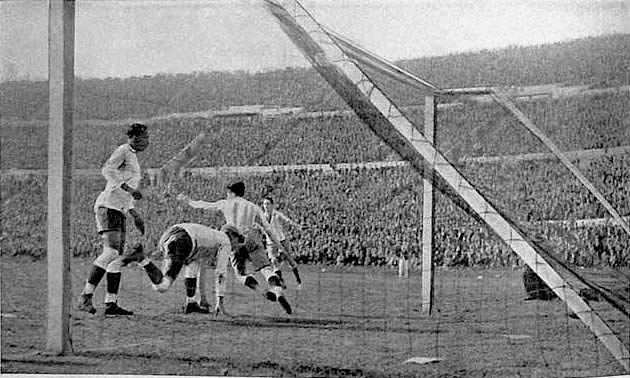
The tournament's real significance was making the national team a vehicle for national narrative. Italy's 1934 World Cup was used by Mussolini as propaganda; Argentina's military government did the same in 1978; Qatar 2022 offered a different version, buying legitimacy with capital rather than ideology. The tournament has never been only a tournament.
Maracanã: the collapse of a nation
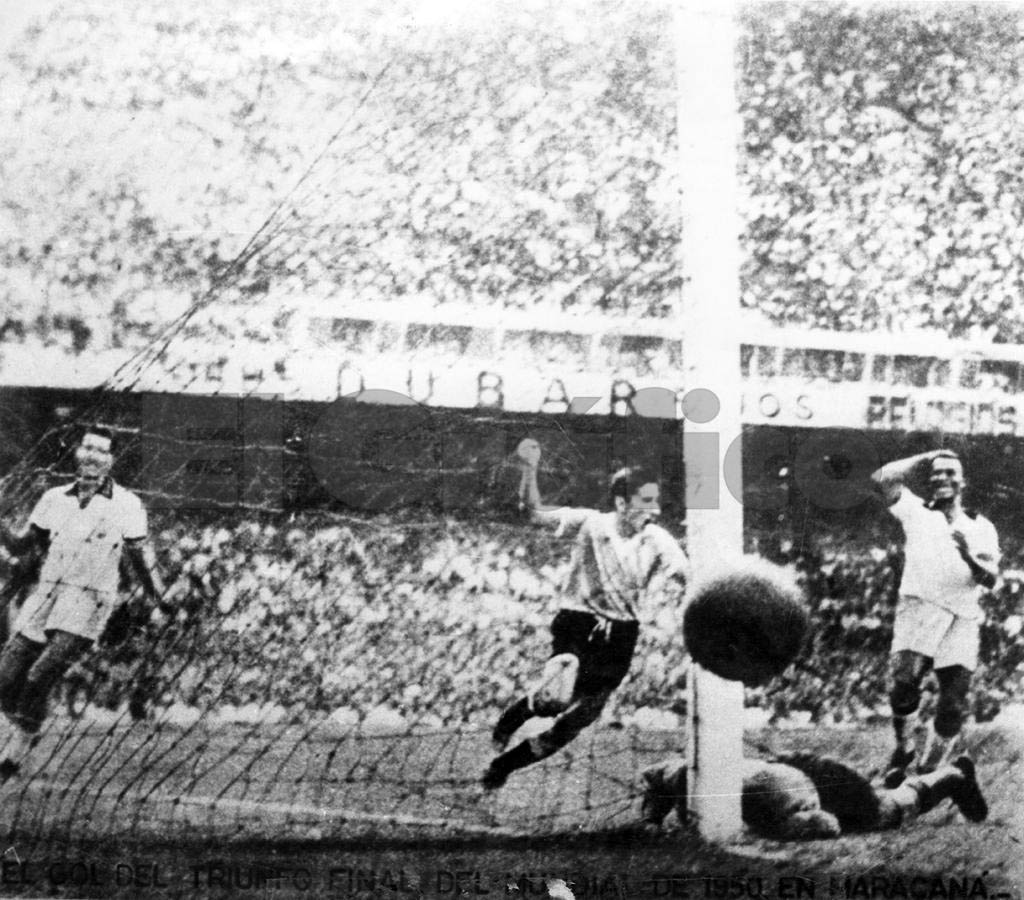
The 1950 World Cup was decided by a final group. Brazil needed only a draw in the last match, before roughly 200,000 people in the Maracanã. Uruguay equalised through Schiaffino and won it through Ghiggia in the 79th minute, 2–1. In Brazil the match is still called the Maracanazo — a word used to explain national character.
Hungary: when tactics ran ahead of institutions
In November 1953 Hungary beat England 6–3 at Wembley — England's first home defeat by a non-British side. In May 1954, in Budapest, it was 7–1. What Hungary had done is set out in chapter three: pull the centre-forward back into midfield and leave his marker with nothing to mark. It was the first time a structural idea, rather than individual quality, produced a systemic rout.
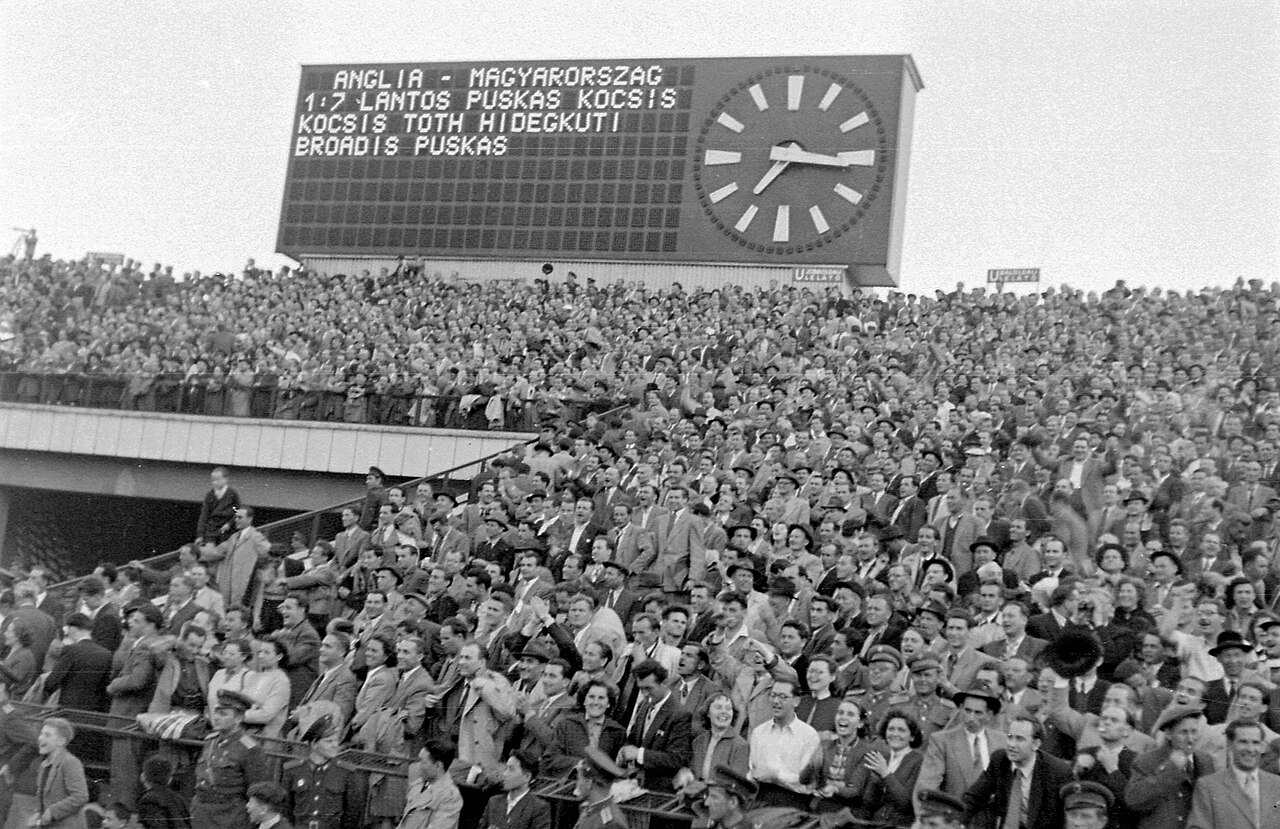
That summer Hungary lost the World Cup final 2–3 to West Germany, the "Miracle of Bern", and became the backdrop to someone else's story. But the tactical effect had already spread: four years later Brazil won the 1958 World Cup with a refined 4-2-4, and a seventeen-year-old named Pelé.
Television, Pelé and the third world
Switzerland 1954 was the first World Cup broadcast across borders; England 1966 the first in colour; Mexico 1970 the first sent worldwide by satellite. The medium reshaped every layer of the game: players became transnational brands, referees began to face slow-motion replay, and tactics became public property.
Brazil 1970 is widely held to be the best side ever assembled: a 4-2-4 that became a 4-3-3 without the ball, a midfield triangle of Gérson, Clodoaldo and Pelé, and Carlos Alberto's run for the fourth goal in the final — one of the most reproduced images in the sport. It was also the first World Cup with substitutes formally written into the laws.
The back-pass law and Bosman: two legal shocks
In 1992 the IFAB banned goalkeepers from handling a deliberate back-pass. It looked minor. In practice it ended the tactic of killing a game by passing backwards to the keeper and forced teams to learn to build with the feet. Every modern "playing out from the back" system depends on that clause.
On 15 December 1995 the European Court of Justice ruled in Bosman: out-of-contract players could move freely, and EU-wide quotas on foreign players were unlawful. Within a decade player movement was fully liberalised: the share of foreign players in the big five leagues rose from under 20 per cent to more than half, smaller leagues became academies for larger ones, and fees and wages grew exponentially.
One changed the physics of the pitch; the other changed the labour market around it. Modern football's shape is largely the sum of those two forces: a faster ball, and freer people.
Data, video and forty-eight teams
Goal-line technology entered competitive football in 2012, VAR was used across the 2018 World Cup, semi-automated offside arrived in 2022 and was routine by Euro 2024. The direction is consistent: take judgement away from people and give it to a reproducible measurement.
In parallel, the decision chain at clubs was rebuilt around data: expected goals, pressing intensity (PPDA) and passing-network centrality now drive recruitment and selection, and contracts contain appearance and performance clauses. The 2026 World Cup expands to 48 teams and 104 matches; the resulting fixture density will change rotation and load management — plausibly the starting point of the next tactical turn.
Sixteen rewrites
| Year | Change | Immediate tactical consequence |
|---|---|---|
| 1863 | Running with the ball and hacking banned | Football and rugby separate; dribbling becomes the only way forward |
| 1866 | Offside requires three defenders between player and goal | The dense forward block (2-2-6) becomes standard |
| 1871 | Goalkeeper may handle the ball | The goalkeeper becomes a distinct position |
| 1872 | Corner kick introduced | Wide crossing and set-piece play appear |
| 1878 | Crossbar added | Height becomes a technical variable in shooting |
| 1891 | Penalty kick and goal nets | Fouls in the area acquire a fixed cost |
| 1902 | Penalty area and penalty spot defined | Defensive positioning becomes valuable in itself |
| 1925 | Offside reduced to two defenders | Produces the WM; goals per game spike immediately |
| 1938 | "Not interfering with play" added to offside | Forwards learn to stand still |
| 1958 | Substitutes formally permitted | The bench becomes a tactical tool |
| 1970 | Red and yellow cards introduced | Fouls become visible, costly and countable |
| 1990 | Level with the last defender is onside | Offside traps and timed runs become specialist training |
| 1992 | Back-pass to the keeper banned | Playing out from the back becomes compulsory; the sweeper-keeper emerges |
| 2012 | Goal-line technology | "Over the line" stops being arguable |
| 2018 | VAR at the World Cup | Handball in the area penalised far more strictly; defending redefined |
| 2022–24 | Semi-automated offside | The risk of a high line becomes computable |