Dribbling was the only language
The 1863 offside law was far stricter than today's: any team-mate ahead of the ball was offside. Forward passing was therefore almost impossible — the receiver had to be behind the ball. Teams had two ways to progress: dribble, or pass backwards and start again.
Hence a flat shape: two defenders, two midfielders, six forwards. Forwards were not asked to make runs but to wait for the ball to be dribbled near them; midfielders took the ball from defenders and carried it forward. This was a game built on individual dribbling; combination play existed only at short range, in give-and-goes.
In the 1870s Scottish sides began using systematic short passing — not forwards but diagonally and backwards, pulling markers apart. That was the first tactical idea built on trading space for time, and it is why Scottish teams dominated English ones through the 1870s and 1880s.
The law changed, so the shape changed
In June 1925 the IFAB reduced offside from three defenders to two. The effect was immediate: goals per game in the English First Division jumped from 2.6 to 3.7 in 1925–26. Two defenders could no longer cover the width and the depth at once.
Herbert Chapman's answer at Arsenal was to drop a centre-half between the two full-backs, creating a back three, and to pull the two inside-forwards back into midfield. Five attackers formed a W, five defenders an M — hence WM.
WM's deeper significance: it was the first clear separation of how many players defend from where they defend. The back three was not three men marking three men but a block that could slide as a unit — the earliest ancestor of zonal defending, sixty years before Sacchi.
Take the centre-forward away
Hungary did not change the formation; they changed what a position meant. Nándor Hidegkuti was nominally the centre-forward but dropped into midfield, dragging his marker out of the defensive line. If the centre-half followed, thirty metres opened behind him; if he did not, Hidegkuti received in an unoccupied zone.
The method was demonstrated in full at Wembley in 1953 (6–3) and in Budapest in 1954 (7–1). England's WM had no answer because it assumed one opponent per position — and Hungary proved that a position can be deliberately vacated.
This is the watershed of modern football. From here, a formation is no longer "who stands where" but "who stands where, at which moment". Every false nine, inverted full-back and dropping pivot since is a descendant of the idea.
Locking opponents in a cage
Catenaccio is often mistranslated as parking the bus. It was a precise man-marking plus sweeper system: four defenders each took one opponent, a libero behind them collected everything that slipped through, three midfielders compressed the centre and fed the wide runners, and two forwards needed only one chance.
Helenio Herrera pushed it to its limit at Inter, winning consecutive European Cups in 1964 and 1965. His training intensity, psychological mobilisation and doctrine that "1–0 is the perfect score" shaped Italian football's self-image for forty years.
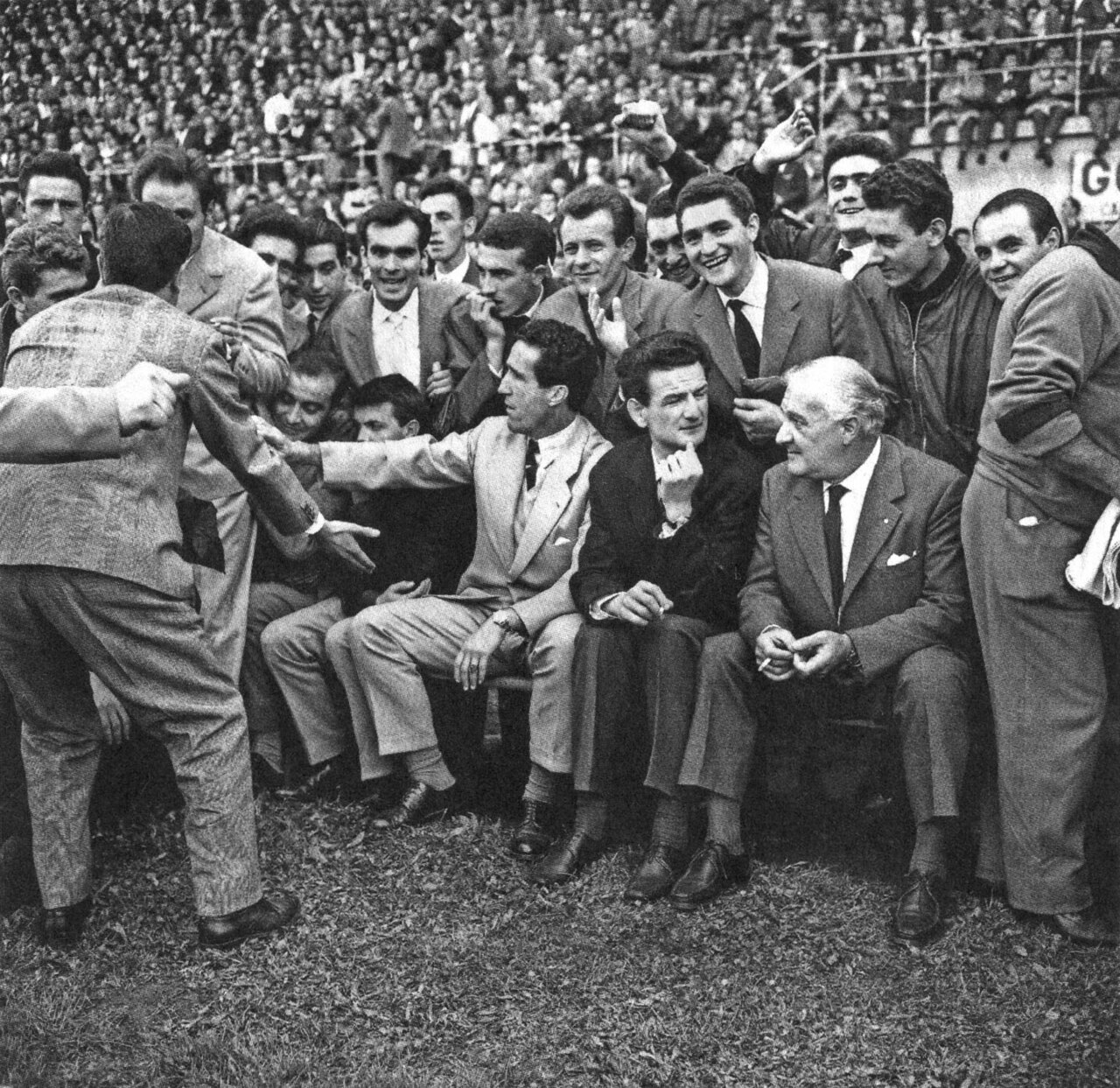
The price was explicit: invention was systematically reduced. Against equal opposition it was devastating; when a team had to create, all that remained were set pieces and counters. Serie A in the 1960s became a league of low scores and high friction.
Position becomes relative
Rinus Michels' Total Football at Ajax and with the Netherlands was not about running. It was about interchange: a centre-back could carry the ball into midfield, a winger could appear centrally, a left winger could switch to the right. Whoever left a position was covered by the nearest team-mate.
The technical precondition was that every player could perform in at least two roles; the physical precondition was pressing across the whole pitch. At the 1974 World Cup the Netherlands played suffocating football until the final, which they lost 1–2 to West Germany — Cruyff's penalty after 55 seconds became the tournament's most quoted footnote.
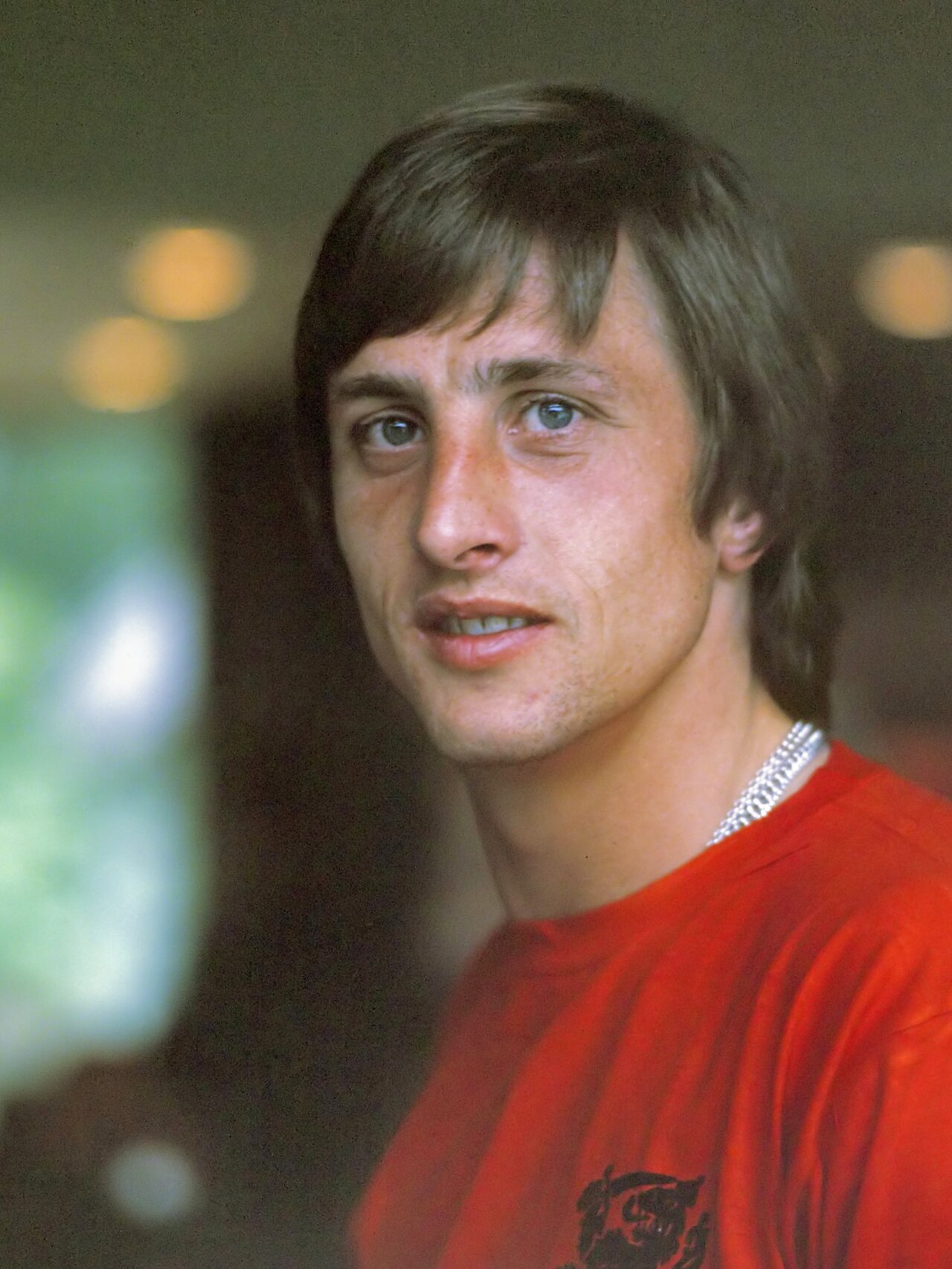
The real legacy arrived thirty years later: Cruyff took positional interchange and "possession as defence" to Barcelona, where they became the intellectual source of tiki-taka. The Dutch did not win the World Cup; they redefined what good football looked like.
Turning the back line into a rope
Arrigo Sacchi at Milan inverted the Italian tradition entirely: do not mark players, mark space. Four defenders held one line, slid together, and used the offside line to push forwards out of the danger zone.
It demanded near-perfect synchronisation — one man's error creates a passing lane through the whole block. Sacchi trained it geometrically, fixing distances between players with ropes and cones and rehearsing how the line shifts as the ball travels wide. Milan won consecutive European Cups in 1989 and 1990, and the 4–0 final against Steaua became a coaching manual.
Zonal defending plus the offside line is the technical basis of every high line since the 1990s. It turned "the defender" from a person into a computable geometric system.
Passing as defending
Guardiola's Barcelona turned possession from means into end: if the ball is at our feet, they cannot score. The technical expression was positional play — the pitch divided into vertical channels and horizontal bands, players standing between the lines so that the ball-carrier always had at least two options.
The false nine was the key component: Messi dropped from centre-forward, pulling a centre-back out of the line while the wingers attacked the space behind. In the 2011 Champions League final Barcelona beat Manchester United 3–1 with close to seventy per cent of the ball; the match became the reference sample for positional play.
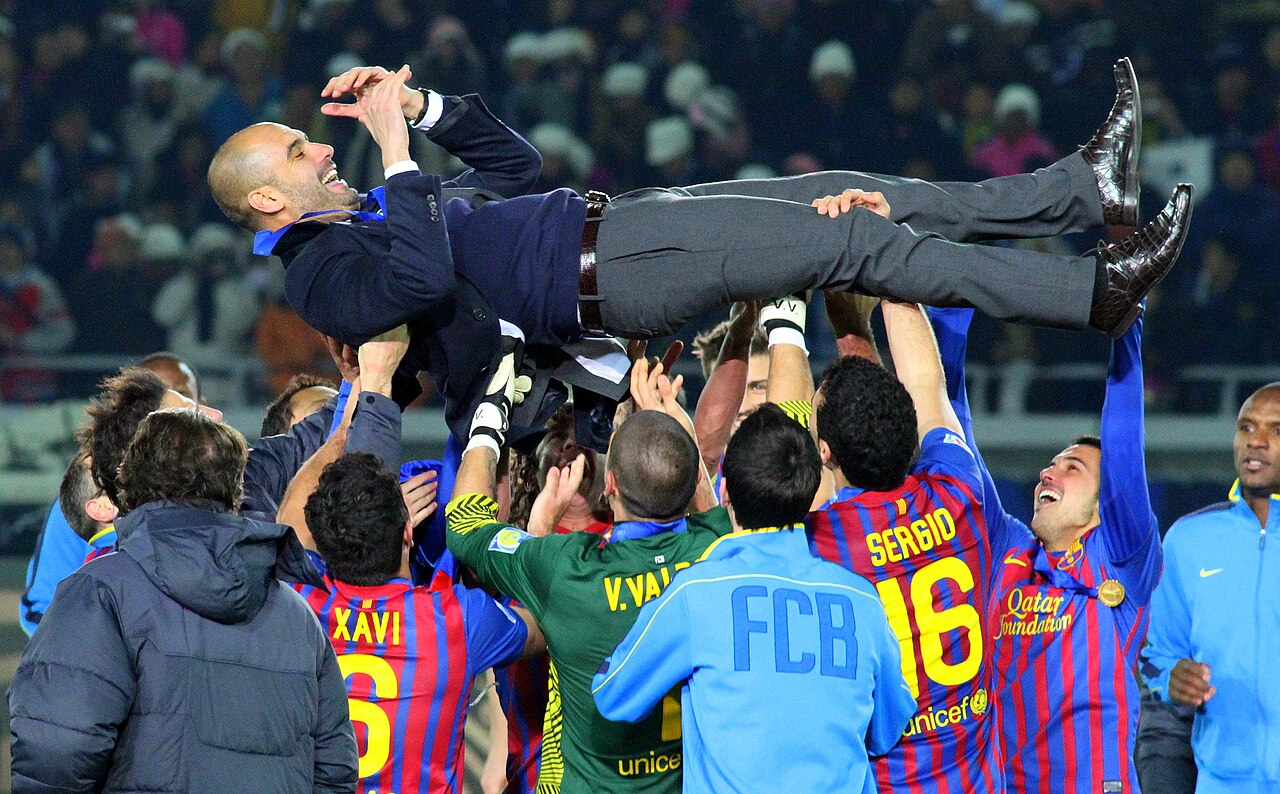
The costs were just as clear: extreme technical and spatial demands, and total dependence on the efficiency of the counter-press. Once the first press was broken, the space behind was enormous. Through the late 2010s more and more sides learned to sit deep and break quickly into exactly that space.
The five seconds after losing the ball
Jürgen Klopp at Dortmund and Liverpool made the counter-press the subject rather than a by-product. The proposition: the seconds after a team wins the ball are when it is most vulnerable — shape not yet spread, passing lanes not yet formed. So instead of retreating, hunt.
The system is now measurable: PPDA (passes allowed per defensive action), shots within five seconds of a regain, and the location of press triggers. It converted "intensity" from an adjective into a value.
The risk is equally visible: compress three lines into thirty-five metres and the space behind becomes a prairie. Which is why the modern goalkeeper must sweep and must pass — he is the last insurance policy of the system.
The number describes only the ball-in-play state
Elite teams now use at least three structures inside one match: 3-2-5 in build-up, 4-4-2 or 4-1-4-1 out of possession, 3-3-4 while pressing. A formation is no longer a shape; it is a state machine.
The 3-2-5 works like this: two centre-backs plus a dropping pivot form a back three in possession, two inverted full-backs step into midfield alongside the pivot, and five players stretch the last line across the full width and depth. The point is numerical superiority through the centre while keeping five players close enough to counter-press immediately.
The companion concept is rest defence: the positions of the players who stay behind during an attack decide how much a turnover costs. The term entered standard coaching vocabulary after 2018 — the marker of a shift from "how do we attack" to "how do we stay safe while attacking".
The next shape
One. Five substitutions. Introduced in 2020 and now permanent. It cuts the match into more segments and makes sustained pressing far more viable: the bench is a tactical variable, not a patch kit.
Two. Semi-automated offside. Once the judgement is accurate to the centimetre, the risk of a high line can be priced. That points to two extremes: more aggressive pressing, or abandoning the trap and dropping deep altogether.
Three. Fixture density. A 48-team, 104-match World Cup in 2026, plus expanded club competitions, makes rotation and load management the core managerial skill. Tactical differences may narrow; squad depth becomes the divider.
The historical rule of thumb: every change in law or format produces a new formation within a decade. 1925, 1992 — and probably 2026.
Thirteen keywords
| Term | In one line |
|---|---|
| Positional play | Creating numerical and angular advantages through where players stand, not by beating a man. |
| Rest defence | The structure left behind during an attack; it decides what a turnover costs. |
| Counter-press / Gegenpressing | Hunting the ball immediately after losing it instead of retreating. |
| Press trigger | The specific pass or touch that signals the whole team to press. |
| False nine | A nominal centre-forward dropping into midfield to pull a centre-back out of the line. |
| Inverted full-back | A full-back stepping into midfield in possession to create a central overload. |
| Half-space | The vertical channel between wing and centre; the main corridor of modern attack. |
| Third-man run | Passer → receiver → a third player running beyond, bypassing a line. |
| Offside trap | Stepping the whole line up so the opposing forward is left offside. |
| Sweeper-keeper | A goalkeeper operating well outside the area to defend the space behind. |
| Libero | An extra defender sweeping behind a man-marking back line. |
| xG (expected goals) | The probability that a shot from a given position and type becomes a goal. |
| PPDA | Passes allowed per defensive action — the lower, the more aggressive the press. |